By clicking “Accept All Cookies”, you agree to the storing of cookies on your device to enhance site navigation, analyze site usage, and assist in our marketing efforts. View our Privacy Policy for more information.
Why Strength Training Can Help Relieve Joint Pain and Chronic Pain
We break down why strength training and lifting weights can actually support your joints, reduce chronic pain, improve movement, and help you feel better in your body day to day.
By
January 28, 2026
.jpg)
Related

If you’ve ever felt like your aches and pains are just “part of life now,” you’re not alone. Many adults start strength training because they want to feel stronger, but quickly discover something unexpected: their joint pain, chronic soreness, and everyday aches improve.
There’s a growing body of research and expert opinion showing that strength training, when done correctly, can actually reduce pain, improve mobility, and support long-term joint health.
What Experts Are Saying
Dr. Stuart McGill, a world-renowned spine researcher, has long emphasized that building robust muscles around joints helps protect them from stress and pain. He explains that muscles provide stability, distribute loads, and reduce wear on joints far better than letting connective tissue take the burden alone.
Exercise physiologists and physical therapists also point to the concept of “load tolerance” — meaning that tissues (muscles, tendons, ligaments) respond to gradually increased loading by becoming stronger and more resilient. This doesn’t happen with passive modalities like stretching alone.
How Strength Training Helps Joints and Pain
Let’s break down the ways strength training can help, and why it works:
1. Muscles Support Joints
Muscles act like built-in shock absorbers. Strong quads and hamstrings help your knees. Strong glutes support your low back. Strong shoulders take pressure off the neck and rotator cuff tendons. When muscles are weak, joints take the force and pain follows.
2. Improved Movement Quality
Joint pain often shows up because movement patterns are inefficient. Strength training improves how you squat, hinge, and step, reducing the repetitive irritation that creates chronic soreness.
3. Adaptation Through Safe Load
Experts like strength and conditioning coach Mike Boyle remind us that tissues adapt to stress when it’s applied gradually and intentionally. That’s the foundation of Thrive adult strength training. Not brute force, but smart load progression.
4. Reduces Sensitization
Chronic pain isn’t always structural. The nervous system can stay on high alert. Regular, controlled strength work (accompanied by deep breathing) helps retrain the nervous system to see movement as safe rather than threatening.
It’s Not About Painful Workouts
This is really important: strength training doesn’t mean pushing through pain. It's time to toss the phrase "no pain, no gain". Strength training for us means:
- Prioritizing proper mechanics
- Progressing intentionally
- Training with awareness
- Building strength without irritation
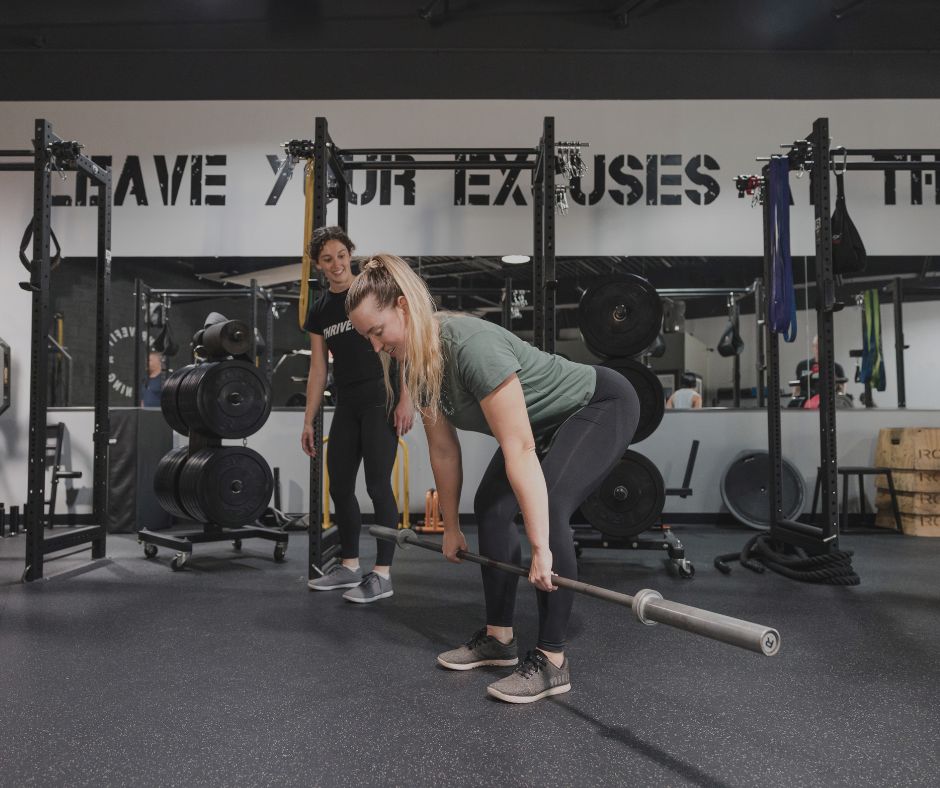
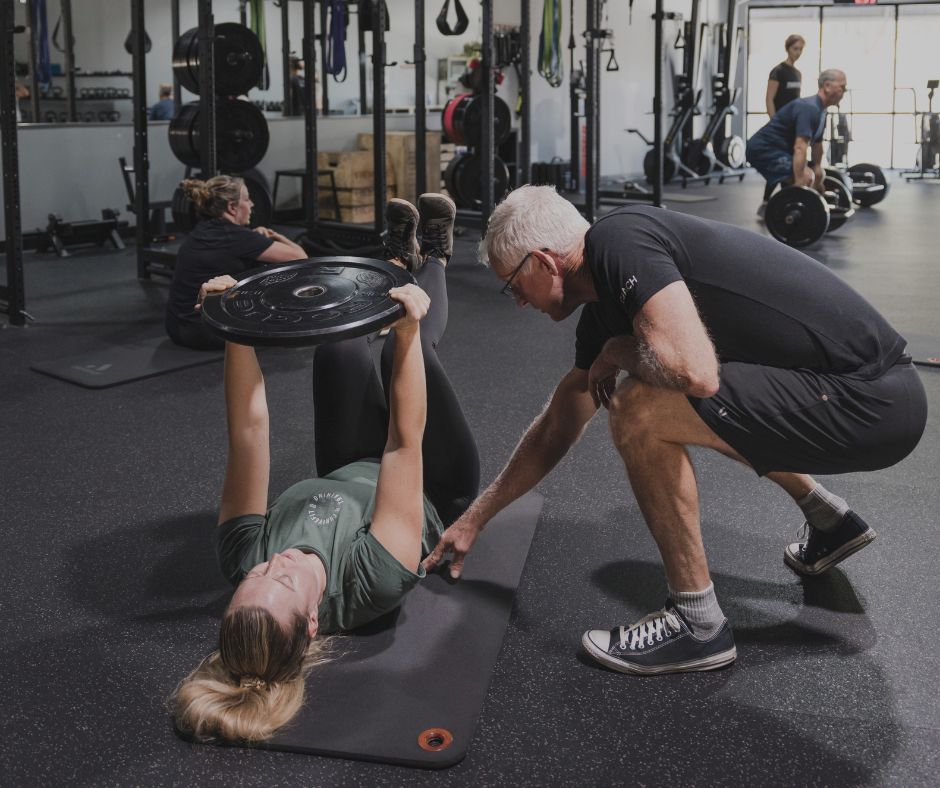
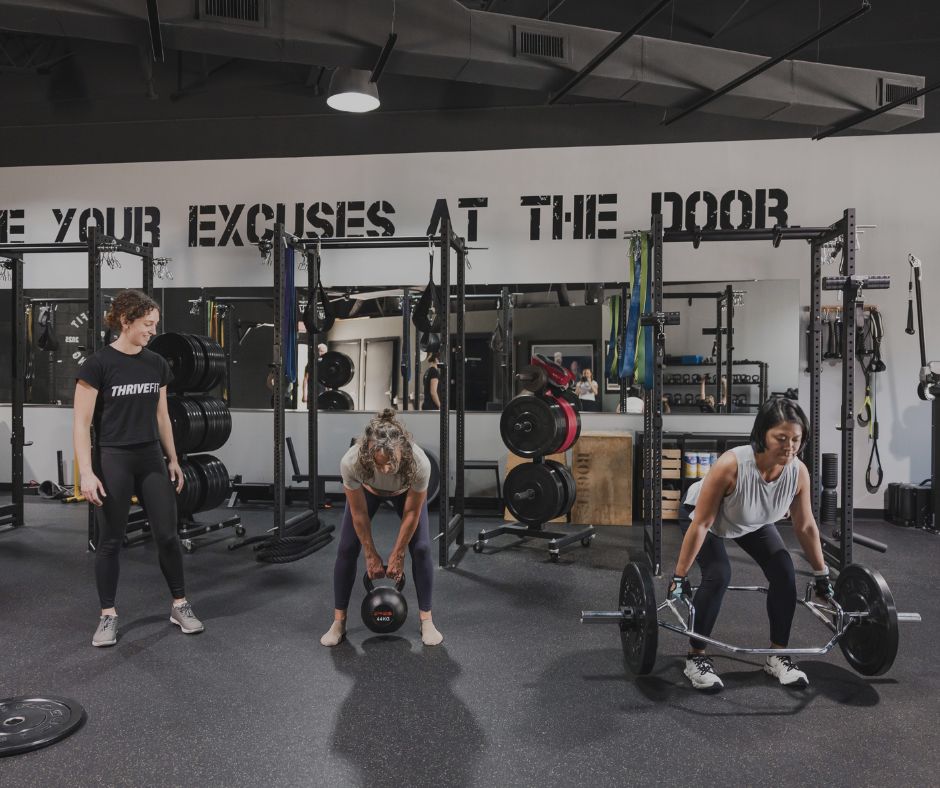
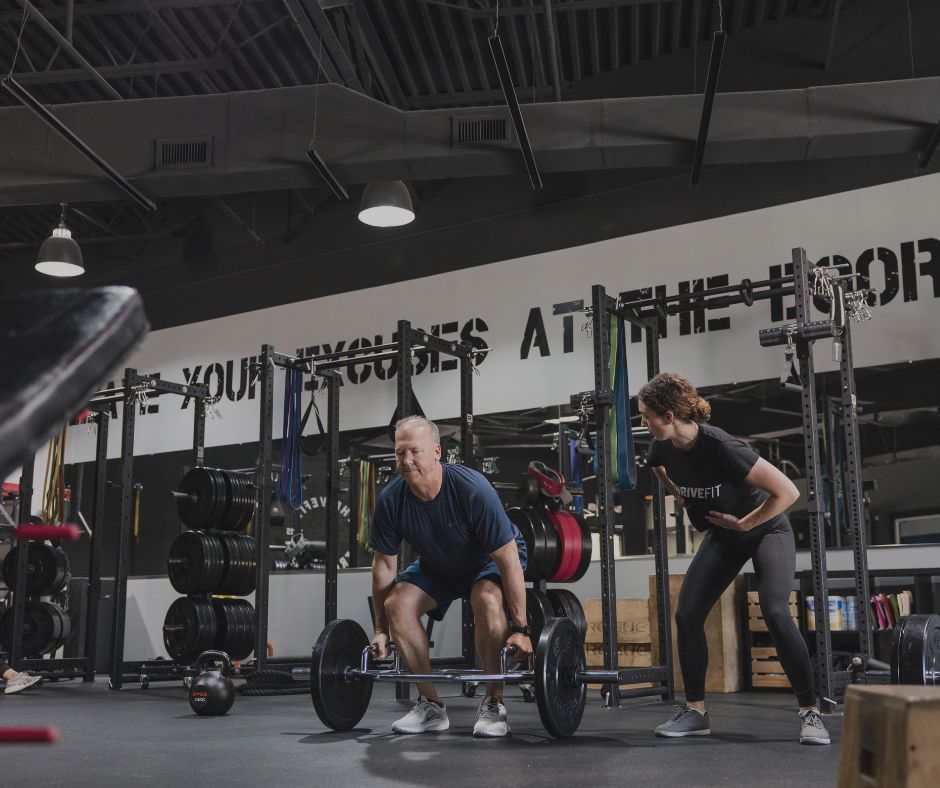
Structured programs, like the one we use at ThriveFit, help people stay strong, mobile, and pain-resilient.
Real Results Come From Consistency
A single workout won’t erase years of accumulated stress but consistent strength training can. Over weeks and months, muscles get stronger, movement becomes more fluid, and the nervous system becomes less sensitized to discomfort.
As Dr. Gabrielle Lyon emphasizes, muscle isn’t just functional for movement, it’s a regulator of metabolism and overall physical resilience. That’s why people often notice pain reduction before they see dramatic aesthetic changes.
Final Takeaway
Strength training is more than a workout and helps:
- Support joints with muscle power
- Refine movement patterns
- Increase tissue tolerance
- Teach the body that movement is safe
If you’ve been dealing with chronic aches, stiffness, or joint discomfort, getting stronger with the right structure and coaching could be one of the best long-term decisions you make.
Ready to build strength the right way? Contact us to learn how our coach-led strength training programs help people move better, feel better, and live pain-free.



.jpg)
.jpg)
.jpg)
.jpg)
.jpg)
.jpg)
.jpg)
.jpg)
.jpg)
.jpg)
.jpg)
.jpg)
.jpg)
.jpg)
.jpg)
.jpg)

.jpg)
.jpg)
.jpg)
.jpg)
.jpg)
.jpg)
.jpg)
.jpg)
.jpg)
.jpg)
.jpg)
.jpg)
.jpg)
.jpg)
.jpg)
.jpg)
.jpg)
.jpg)
.jpg)
.jpg)
.jpg)
.jpg)
.jpg)
.jpg)
.jpg)
.jpg)
.jpg)
.jpg)
.jpg)
.jpg)
.jpg)
.jpg)
.jpg)
.jpg)
.jpg)
.jpg)
.jpg)
.jpg)
.jpg)
.jpg)
.jpg)
.jpg)
.jpg)
.jpg)
.jpg)
.jpg)
.jpg)
.jpg)
.jpg)
.jpg)
.jpg)
.jpg)
.jpg)